

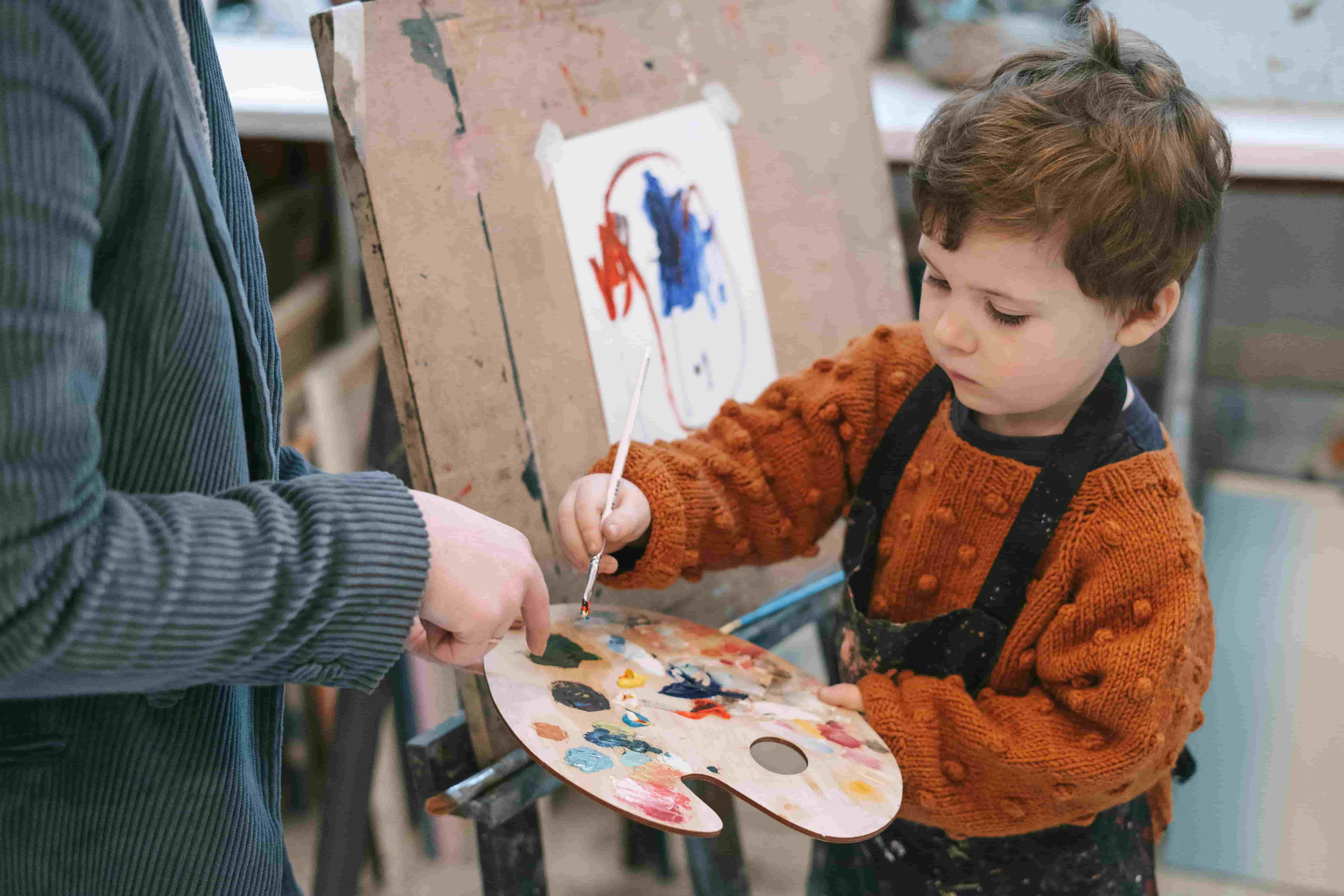
The short answer: Schools and parents often put everything into numbers, logical reasoning, and academic performance. Understandable — good grades are still seen as career door-openers. But research consistently shows that fostering creativity in children is a decisive factor in raising more resilient, happier, and more innovative people. Without imagination, even the sharpest minds can become one-track thinkers. With it, children tackle real problems with flexibility and confidence.
Science Says: Creativity Is a Superpower
Creativity isn't just "nice to have." It has a direct, measurable impact on learning, emotions, and social development.
- Brain training: Creative activities activate both brain hemispheres, strengthen divergent thinking, and even support mathematical understanding through playful experimentation.
- Emotional resilience: Painting, making music, or inventing stories can reduce stress, build self-confidence, and help children regulate their emotions.
- Social skills: Role play and group projects train teamwork, communication, and tolerance — abilities that often matter more in real life than perfect equations.
- Long-term success: Creative children more frequently develop innovation, emotional intelligence, and self-efficacy as adults.
Traditional vs. Creative: What Daily Life Really Trains
Creativity doesn't replace logic — it makes thinking flexible and connected to real life.
- Memorizing formulas vs. inventing and telling original stories
- Puzzles with instructions vs. freeform LEGO building without a guide
- Quiz apps for facts vs. role play with cushion costumes and cardboard props
- Homework drills vs. theater, dancing, and making music
- Rewarding single correct answers vs. celebrating many different ideas
10 Practical Ways to Foster Creativity in Children
Every idea here is everyday-ready and needs at most 2 to 5 minutes of preparation.
- Free drawing & crafting: Provide materials without instructions — no time pressure, no right or wrong. Local craft workshops for children can be found in the Famville app.
- Nature trips with imagination: Collect leaves and stones together, then invent stories around them. Use the Famville app to find nature walks and outdoor family activities nearby.
- "Yes, and…" improv: Start a story and let your child continue it. This trains language, imagination, and spontaneous problem-solving at the same time.
- What-if questions: Ask things like "What if children ran the world?" These open up new thinking without any performance pressure.
- Material mayhem: Blankets, cushions, and cardboard boxes become castles, stages, or space stations. The simpler the material, the more creative the ideas.
- 10-minute story sprint: Invent a location, characters, and a plot together in just 10 minutes — quick, easy, and surprisingly effective.
- Gesture and move while thinking: Encourage using hands while explaining or brainstorming. Research shows it helps children generate more ideas.
- Junk art: Turn cardboard tubes, packaging, and old boxes into art objects. Focus on inventing, not on perfection.
- Music & movement: Invent songs together or dance freely. Use the Famville app to find local music and dance classes filtered by age group.
- Cook together: Kneading dough, inventing shapes, mixing colors — sensory, creative, and completely part of everyday life.
Why Act Now? The Creativity Gap
In an AI-shaped world, children need more than the ability to run calculations. They need original thinking, adaptability, and empathy. When you prioritize fostering creativity in children today, you strengthen their emotional stability and their future opportunities at the same time.
Looking for creativity activities near you? Search the Famville app for workshops by category — theater, crafts, music, and more — filtered by age, location, and ratings.